
Government Help to Buy Scheme Explained
Saving a 20% deposit while rents climb and property prices keep moving is a challenge a lot of Australians know well. It can feel like the goalposts keep shifting, no matter how disciplined you are with your savings. The Australian Government's Help to Buy scheme is designed to address exactly that problem.
Launched in December 2025, the government Help to Buy scheme is a shared equity programme that lets eligible buyers purchase a home with as little as a 2% deposit, with the government contributing part of the purchase price. It is one of the most significant housing initiatives introduced in recent years, and for buyers who meet the criteria, it could make the difference between getting into the market now versus waiting years longer.
Here is a straightforward breakdown of how the scheme works, who it is for, and what to think about before you apply.
What Is the Government Help to Buy Scheme?
The government Help to Buy scheme is a shared equity programme administered by Housing Australia on behalf of the Australian Government. Under the scheme, the government contributes a portion of the purchase price of your home in exchange for an equivalent ownership stake in the property. This reduces the size of the deposit you need and the size of the loan you have to take out, which in turn lowers your monthly repayments.
The government can contribute:
- Up to 40% of the purchase price for a new home
- Up to 30% of the purchase price for an existing home
You still own and live in the property. The government holds a proportional equity share but does not charge rent or interest on its contribution. When you eventually sell, or if you choose to buy out the government's share sooner, you repay the government based on the property's value now. If the property has gone up in value, the government's share reflects that increase. The same applies if the value has fallen.
The scheme opened for applications on 5 December 2025. With 10,000 places available per financial year, and more than 2,300 already approved in the first few months, it is worth moving quickly if you think you may be eligible.
How Does the Help to Buy Scheme Work in Practice?
The easiest way to understand how the scheme works is with a real example. Say you want to buy an existing home priced at $600,000. Normally, a 20% deposit would mean saving $120,000 before you could avoid paying Lenders Mortgage Insurance (LMI). Under Help to Buy:
- You contribute a 2% deposit, which is $12,000
- The government contributes 30% of the purchase price, which is $180,000
- Your home loan covers the remaining 68%, which is $408,000
You avoid LMI entirely. Your monthly repayments are based on your $408,000 loan, not the full $600,000. That difference can amount to hundreds of dollars less per month compared to borrowing the full amount yourself.
You cannot apply to Housing Australia directly. Applications go through a participating lender, who assesses your financial position and submits the application on your behalf. Once conditionally approved, your place in the scheme is reserved for 90 days, with the option of one 90-day extension, giving you time to find a suitable property.
As of early 2026, the only two participating lenders are Commonwealth Bank and Bank Australia. More lenders are expected to join throughout 2026, which should increase competition and product choice for buyers. It is worth keeping an eye on this as the panel expands.
Who Is Eligible for the Help to Buy Scheme?
To qualify for the government Help to Buy scheme, you need to meet the following criteria:
- Australian citizen: You must be an Australian citizen and at least 18 years of age
- Income cap: your annual taxable income must be $100,000 or less for individual applicants, or $160,000 or less for couples and single parents, based on your most recent ATO Notice of Assessment
- No current property ownership: you must not currently own any property or land in Australia or overseas at the time of application. If you previously owned property and have since sold it, you may still be eligible
- Owner-occupier: you must intend to live in the home as your principal place of residence. The scheme cannot be used for investment properties
- Minimum deposit: you need to have saved at least a 2% deposit
- Property price cap: the property you are buying must be within the price cap for your location
Single parents may be eligible under slightly different conditions, including an exemption from the requirement to have never owned property previously. If you are unsure whether your circumstances qualify, speaking with a broker before approaching a lender can save you a lot of time.
What Are the Property Price Caps?
Each state and territory has its own property price caps under the Help to Buy scheme. These caps reflect local market conditions and set the maximum purchase price for a property to be eligible. The current caps for the major capital cities and regional centres are:
- Sydney: $1,300,000
- Brisbane, Gold Coast and Sunshine Coast: $1,000,000
- Canberra: $900,000
- Melbourne: $950,000
- Perth: $850,000
- Adelaide: $700,000
- Darwin: $700,000
- Hobart: $700,000
- Regional Queensland (outside Brisbane, Gold Coast and Sunshine Coast): $700,000
For buyers on the Sunshine Coast or in south-east Queensland, the $1,000,000 cap is a practical threshold that covers a meaningful range of properties across the region. The cap applies to the final purchase price, so it is important to check the specific postcode using the Housing Australia price cap search tool before committing to a property.
Tasmania has not yet passed the enabling legislation required to participate in the scheme. Western Australia is also still working through its legislative process. If you are based in either state, it is worth checking the current status before planning around Help to Buy.
What Are the Benefits and Trade-Offs?
What works in your favour
- You can get into the market with a 2% deposit instead of waiting to save 20%
- Your home loan and monthly repayments are significantly smaller
- You avoid Lenders Mortgage Insurance, which can otherwise cost tens of thousands of dollars
- The government does not charge interest or rent on its equity share
- You can buy out the government's share at any time, giving you a path to full ownership
What to think carefully about
- The government shares in any capital gains when you sell, in proportion to its equity stake
- You are subject to ongoing income eligibility checks while you remain in the scheme
- If your income grows above the threshold, you may need to buy back part or all of the government's share
- There are only 10,000 places nationally each year, so spots are competitive
- As of early 2026, only two lenders participate, which limits your product options for now
- You still need to cover stamp duty, legal fees, and other upfront costs separately from the 2% deposit
For many buyers, the trade-offs are well worth it. Getting into the market years earlier and carrying a significantly smaller loan can outweigh the eventual cost of repaying the government's share on sale. But the right answer depends on your individual circumstances, how long you plan to stay in the property, and what other options are available to you.
How Does Help to Buy Compare to the First Home Guarantee?
The First Home Guarantee and Help to Buy are often mentioned together, but they work quite differently. The First Home Guarantee is a loan guarantee scheme where the government acts as guarantor for part of your loan, allowing you to buy with a 5% deposit without paying LMI. You borrow the full purchase price yourself, and the government provides a guarantee to the lender.
Help to Buy goes further. The government actually contributes money toward the purchase price, which means your loan is smaller from the outset. The trade-off is that the government holds an equity stake in your home, which you will eventually need to repay.
You cannot stack the two schemes together, but depending on your income, deposit size, and how long you expect to hold the property, one may suit you significantly better than the other. A broker can help you model both options and work out which one makes more financial sense for your situation.
How Synergy Mortgage Brokers Can Help
Navigating a new government scheme, understanding exactly what you qualify for, and determining whether it is the best path forward requires time and a solid understanding of what is available. That is what we are here for.
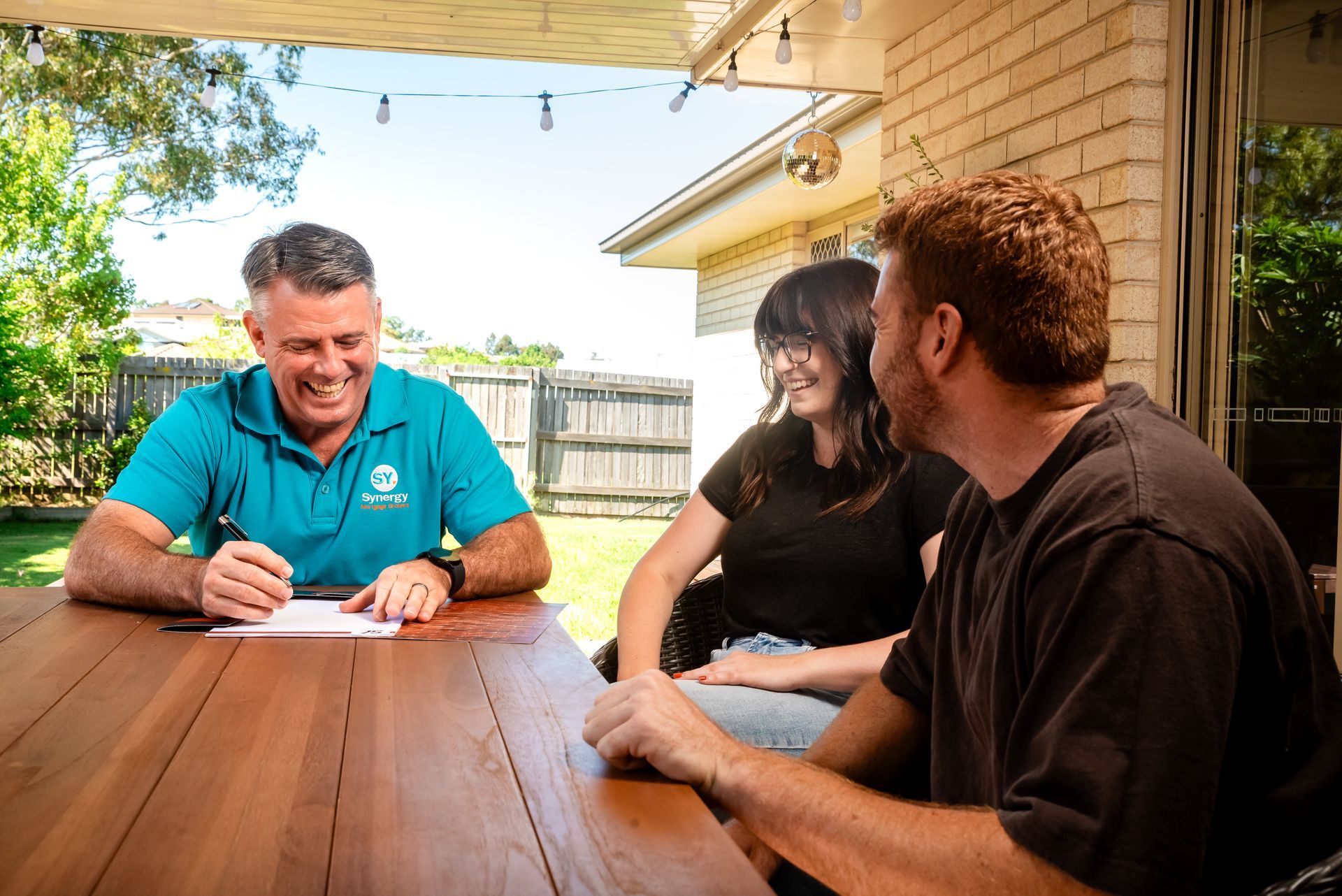
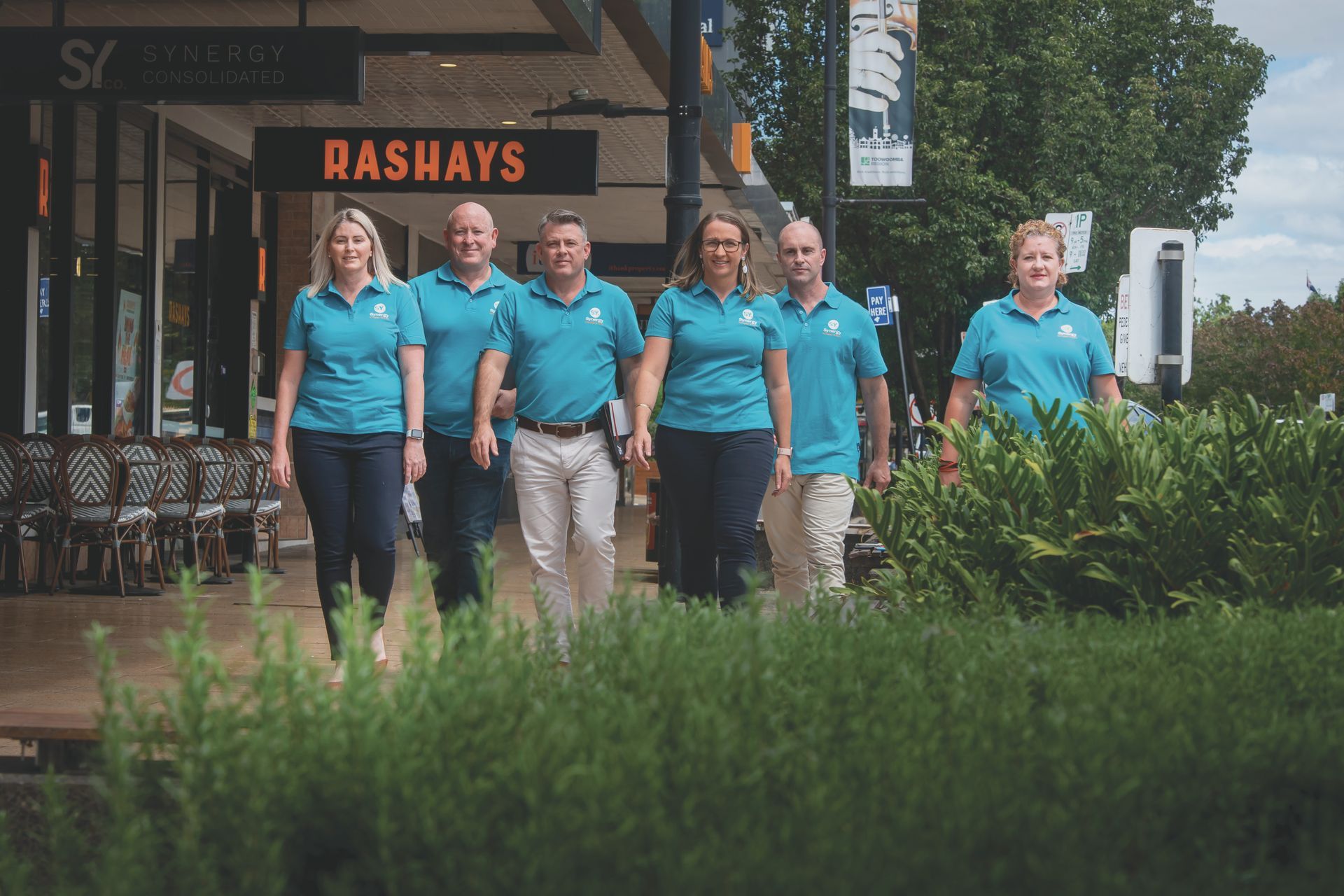
At Synergy Mortgage Brokers, we help first home buyers across the Sunshine Coast, Toowoomba, and Queensland understand all of the options on the table, including Help to Buy, the First Home Guarantee, state-based schemes, and other first home buyer support programmes. We take the time to understand your income, savings, property goals, and timeline, and then work through what makes the most sense for you.
Because Help to Buy applications currently go through only two participating lenders, it is especially important to get independent guidance before you walk into a branch. We can assess your eligibility, compare your options across the broader lending market, and make sure you are not missing a more suitable alternative.
Our service costs you nothing. We are paid by the lender when your loan settles, so you get honest, independent advice at no out-of-pocket cost to you.
Ready to explore your options? Call us on 1300 324 588, email hello@synergymortgagebrokers.com.au, or book a free consultation at www.synergymortgagebrokers.com.au.
Please note: This article is general information only and does not constitute financial advice. Help to Buy eligibility criteria, price caps, and scheme conditions are subject to change. For the most current information, visit firsthomebuyers.gov.au or speak with a qualified mortgage broker before making any decisions.
Subscribe Today!
Stay in the loop - subscribe to our newsletter for the latest trends and insights.
Contact Us Today
We’d love to hear from you. Choose the most convenient method and we’ll get back to you as soon as we can.
Contact Us